
Be Water Wise
Approximately 50-70% of the body consists of water. To maintain normal health, it is recommended to drink 8 glasses of water per day, as water is lost through the kidneys, bowels, skin, and lungs, and needs to be replenished. If you don't drink adequate amounts of water, you can experience fatigue, irritability, increased thirst, dry mouth and skin, as well as dizziness and headaches.
Adequate water intake helps to:
• Regulate body temperature.
• Promote optimal absorption of vitamins.
• Remove waste products through the kidneys.

1 Make water the first choice of drink instead of sweetened drinks.
2 Water is more affordable and has no energy value.
3 Have water at hand to ensure optimal intake.
4 Set reminders on your cell phone and computer, or make use of sticky notes to drink water every hour.
5 Flavor water with slices of lemon, lime, or cucumber. Mint leaves, berries, and strawberries are also great flavouring agents.
6 Prepare homemade unsweetened iced tea with rooibos or other fruity herbal teas. Top up with ice and garnish with lemon slices, mint, or fresh fruit.
7 Increase water intake, especially in hot weather.
Did you know?
A link exists between regular water consumption and healthier food choices. If sweetened drinks are the preferred choice of fluid, the diet will mainly consist of fatty foods and refined carbohydrates, for e.g. sweets, cookies, biscuits, and desserts.
Sweetened drinks
Fizzy drinks, teas, flavored water, drinking yoghurt, sports, and energy drinks are all considered sweetened drinks. They are sweetened with free sugars and may be in the form of brown sugar, corn sweetener, corn syrup, dextrose, fructose, glucose, high-fructose corn syrup, honey, malt syrup, molasses, raw sugar, and sucrose.
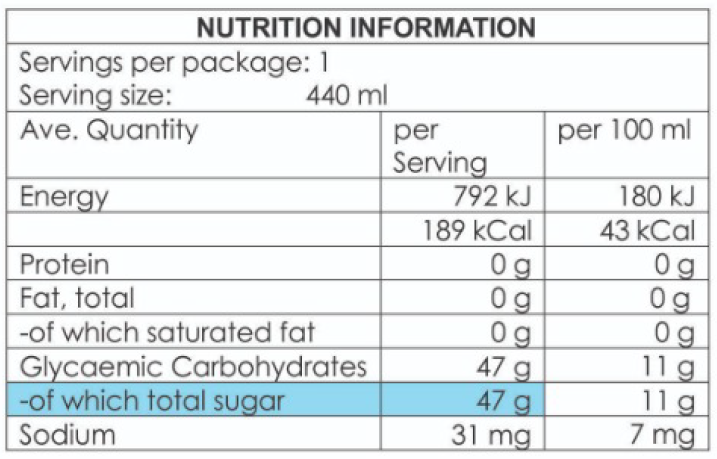
Sweetened drinks are normally loaded with sugar. To determine the amount of sugar added, you need to interpret the food label below.
Look out for the words: “Total Sugar” and see how much sugar in terms of grams is indicated next to it. Nutritional information is indicated per 100 ml and per serving size. To calculate the number of teaspoons of sugar, divide the number of grams of total sugar by 4. For example, a 440 ml soft drink contains 47 grams of sugar, divide 47 by 4. This equals 12 teaspoons of sugar.
Daily consumption of 250 ml sweetened drink:
• Increase the risk of becoming overweight by 27%, while a child's risk increases with 55%.
• Increase cholesterol levels with 20% when taken for two weeks.
• Increases the risk of suffering a heart attack with 29%
• Increases the risk for developing diabetes with 18%.
Be cautious
Sweetened drinks can affect your health. Make an informed choice and choose water!

Be Water Wise
Approximately 50-70% of the body consists of water. To maintain normal health, it is recommended to drink 8 glasses of water per day, as water is lost through the kidneys, bowels, skin, and lungs, and needs to be replenished. If you don't drink adequate amounts of water, you can experience fatigue, irritability, increased thirst, dry mouth and skin, as well as dizziness and headaches.
Adequate water intake helps to:
• Regulate body temperature.
• Promote optimal absorption of vitamins.
• Remove waste products through the kidneys.
1 Make water the first choice of drink instead of sweetened drinks.
2 Water is more affordable and has no energy value.
3 Have water at hand to ensure optimal intake.
4 Set reminders on your cell phone and computer, or make use of sticky notes to drink water every hour.
5 Flavor water with slices of lemon, lime, or cucumber. Mint leaves, berries, and strawberries are also great flavouring agents.
6 Prepare homemade unsweetened iced tea with rooibos or other fruity herbal teas. Top up with ice and garnish with lemon slices, mint, or fresh fruit.
7 Increase water intake, especially in hot weather.
Did you know?
A link exists between regular water consumption and healthier food choices. If sweetened drinks are the preferred choice of fluid, the diet will mainly consist of fatty foods and refined carbohydrates, for e.g. sweets, cookies, biscuits, and desserts.
Sweetened drinks
Fizzy drinks, teas, flavored water, drinking yoghurt, sports, and energy drinks are all considered sweetened drinks. They are sweetened with free sugars and may be in the form of brown sugar, corn sweetener, corn syrup, dextrose, fructose, glucose, high-fructose corn syrup, honey, malt syrup, molasses, raw sugar, and sucrose.
Sweetened drinks are normally loaded with sugar. To determine the amount of sugar added, you need to interpret the food label below.
Look out for the words: “Total Sugar” and see how much sugar in terms of grams is indicated next to it. Nutritional information is indicated per 100 ml and per serving size. To calculate the number of teaspoons of sugar, divide the number of grams of total sugar by 4. For example, a 440 ml soft drink contains 47 grams of sugar, divide 47 by 4. This equals 12 teaspoons of sugar.
Daily consumption of 250 ml sweetened drink:
• Increase the risk of becoming overweight by 27%, while a child's risk increases with 55%.
• Increase cholesterol levels with 20% when taken for two weeks.
• Increases the risk of suffering a heart attack with 29%
• Increases the risk for developing diabetes with 18%.
Be cautious
Sweetened drinks can affect your health. Make an informed choice and choose water!